


I’m sitting, one hour into a six-hour taxi ride from Delhi to Jaipur, while my wife, Abs, sleeps soundly beside me. Outside the window, Delhi unfolds in a blur of headlights, scooters, dust and relentless horns.
The roads feel lawless. Cars drift between lanes without warning, motorbikes appear from impossible angles, and our driver seems entirely unbothered by any of it.
Jaipur (The Pink City)
If this were back home in the UK, I’d probably be asking to get out of the taxi immediately. Yet somehow, here, I feel strangely calm. Maybe it’s blind trust. Maybe it’s acceptance. Or maybe it’s simply the realisation that everyone around us is moving with the same rhythm, however chaotic it first appears. “They do this every day,” I keep telling myself. “They know what they’re doing.”
Less than a year ago, Abs and I travelled the length of Vietnam, beginning in the hazy, frenetic streets of Hanoi. That same feeling hit us there, too. At first, it was overwhelming. Scooters poured through junctions in endless waves, weaving around one another with centimetres to spare, yet somehow everything continued to move. No panic. No aggression. No collisions. Beneath the disorder was a strange sense of flow.
Delhi feels different, but familiar in spirit. There’s the same intensity, the same sensory overload, and the same honesty that make places like this feel so alive.
We’ve still got hours ahead of us on uneven roads, so I’m going to attempt to get some sleep before sunrise. The road to the Pink City begins here.

Hawa Mahal
Affectionately known as “The Pink City”, Jaipur is saturated in warm terracotta tones, dusty rose facades and faded red sandstone. Colour seems to spill from every street corner.
One of the city’s most recognisable landmarks is the extraordinary Hawa Mahal, positioned in the heart of Jaipur’s old city. Built in 1799, the five-storey structure was designed so the royal women of the court could observe the streets and celebrations below without being seen themselves.
Its honeycomb-like façade feels almost surreal in person. Delicate, geometric and impossibly detailed, it catches the light beautifully throughout the day.

Traditional Dress in Jaipur
We instantly fell in love with the colour palette of Jaipur. Rich reds, saffron oranges, deep purples and faded pinks appear everywhere, from painted buildings to traditional garments worn throughout the city.
Pictured here is a woman wearing a Ghagra Choli, a traditional outfit commonly seen in Rajasthan. The intricate fabrics and layered jewellery mirror the visual richness of Jaipur itself and perfectly capture the spirit of the city.

Amer Fort
Located around 11 kilometres outside Jaipur, Amer Fort is one of the most breathtaking places we visited during the trip.
Built in 1592 for the royal family, the fort stands as an overwhelming display of craftsmanship, wealth and scale. Constructed from red sandstone and marble, the interiors are filled with intricate carvings, mosaic work and hand-finished details that feel astonishingly preserved centuries later.

One of the most remarkable spaces inside is the Sheesh Mahal, often referred to as the chamber of mirrors. It’s said that a single candle was once enough to illuminate the entire room, with thousands of mirrored fragments reflecting the light across every surface.
Without question, the artistry and detailing we encountered throughout Amer Fort left a lasting impression on us creatively. You can trace elements of that influence throughout many of our designs.
Jaipur’s Streets
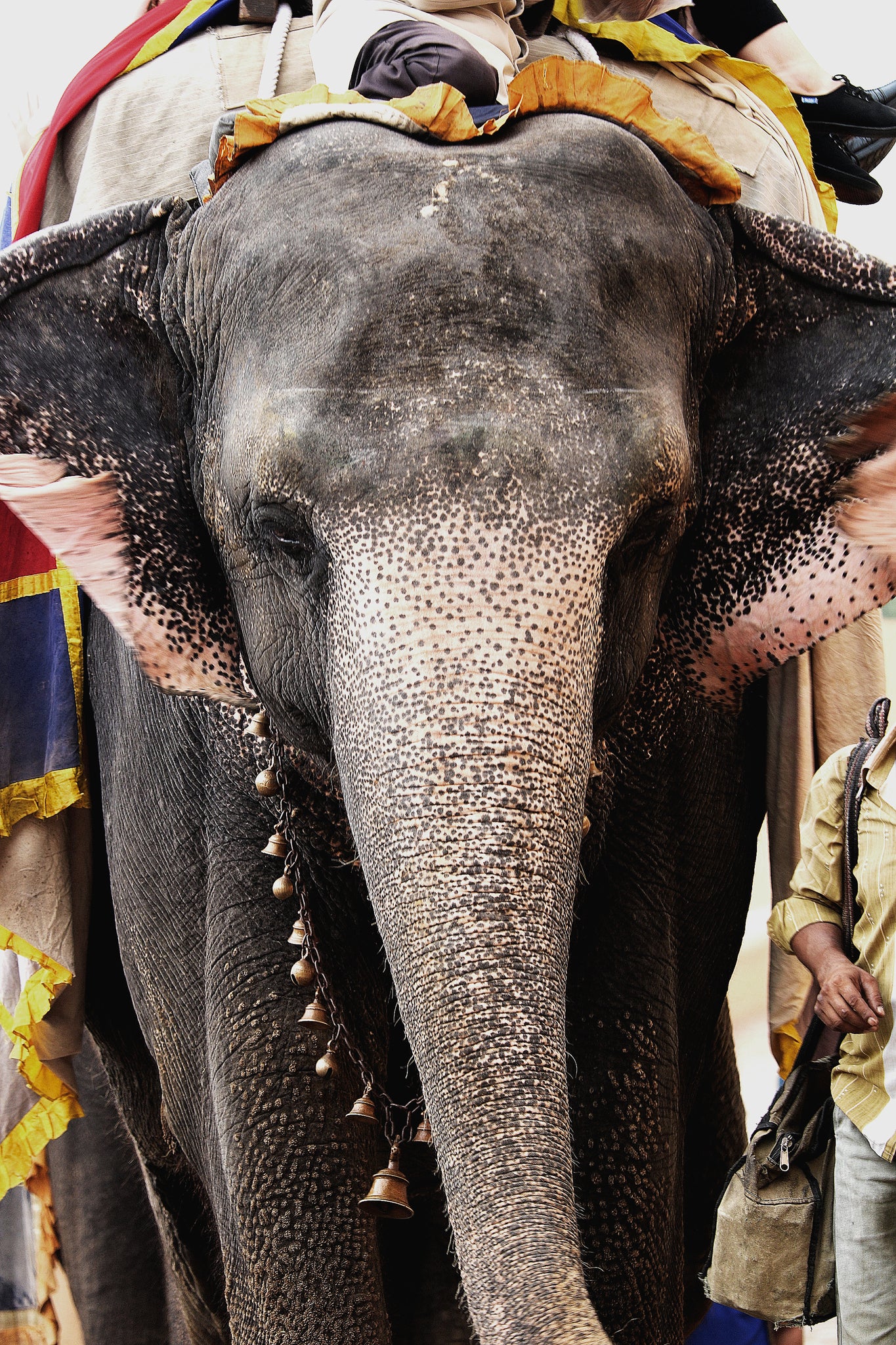
Jaipur’s old town is the beating heart of the city. It’s loud, crowded, colourful and completely immersive in the best possible way.
Market stalls line the streets from early morning, selling everything from handwoven textiles and pottery to jewellery, spices and traditional clothing. Everywhere you turn, there’s movement, conversation and colour.
Of course, you quickly become acquainted with Jaipur’s street vendors, all eager to draw you into their shops or market stalls. But somehow, it never feels intrusive. It’s part of the atmosphere, part of the rhythm of the city itself.

Artisan Craftsmanship
Our search for the right rug supplier took us across countless workshops, conversations and factories before eventually leading us to Jaipur.
Finding a partner was never just about quality alone. We wanted to work with people whose values, craftsmanship and long-term vision aligned with our own.
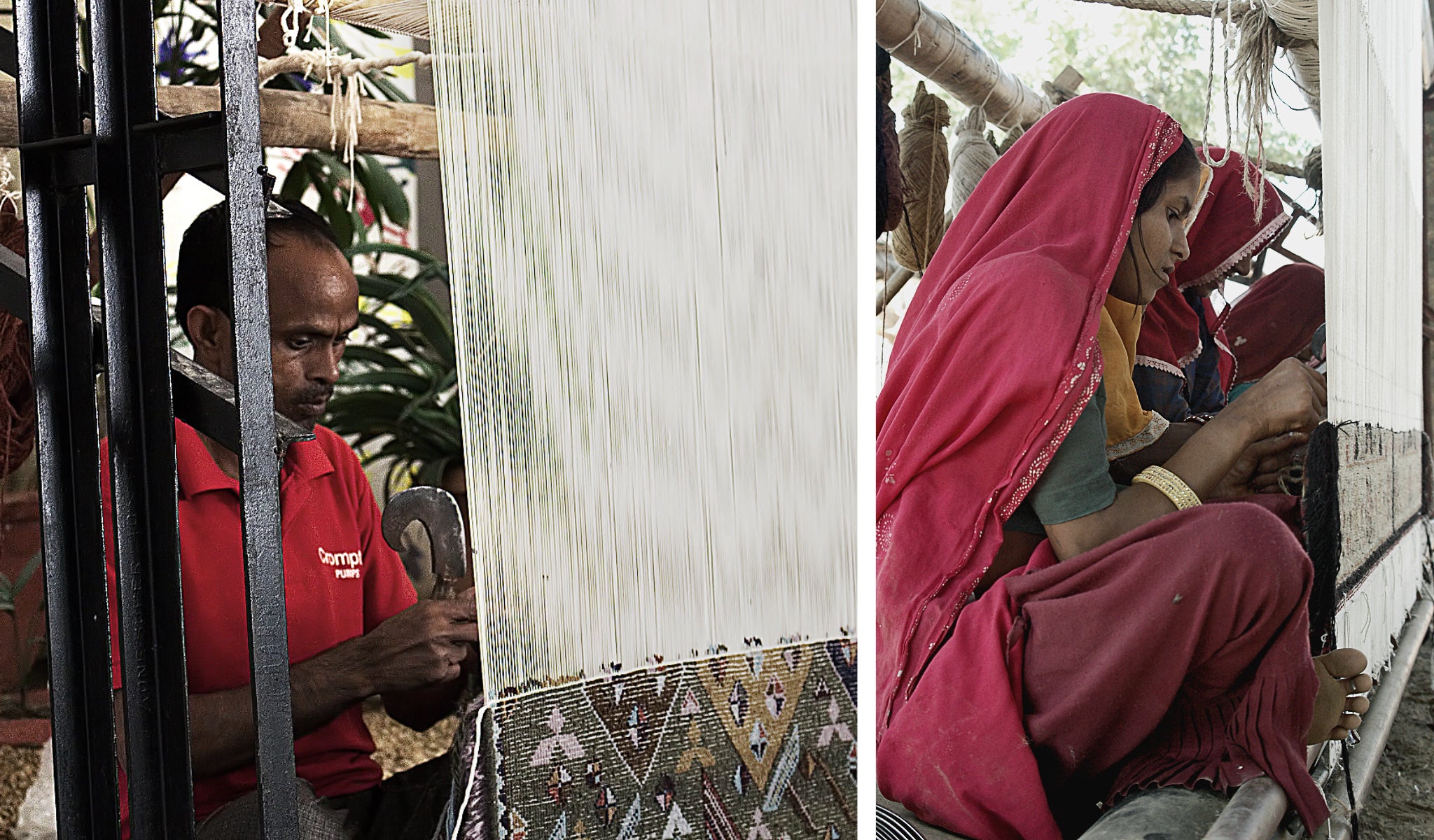
Jaipur has earned a global reputation for its flatweave and hand-knotted rugs, and it became immediately clear why. The level of artistry involved is extraordinary. Every stage of the process is deeply considered, from hand-dyeing fibres to weaving intricate geometric and vintage-inspired patterns entirely by hand.
Hand-woven rugs
When we first spoke with our partner, saw their work in person and learned more about their reputation within the industry, we knew we had to visit them ourselves.
What stayed with us most, though, was hearing the stories behind the craft. The rug industry supports countless families throughout Rajasthan, providing skilled employment, training and opportunities across local towns and villages.
Specialising in contemporary geometric designs alongside transitional vintage-inspired pieces, their approach felt naturally aligned with our own aesthetic from the very beginning.
It’s rare to find craftsmanship, integrity and creativity so closely intertwined, but in Jaipur, it feels embedded into the culture itself. Read Part 2.