


Buying bar stools should be simple. Yet it usually ends with a tape measure in hand, rechecking dimensions for the tenth time and wondering whether those stools you’ve finally settled on are about to arrive ridiculously low or awkwardly high.
The good news is that getting it right is actually fairly straightforward once you know the key measurements to work from. Here’s everything you need to know before choosing your kitchen bar stools.
Bar Stool Sizing Guide

Counter Height Stools
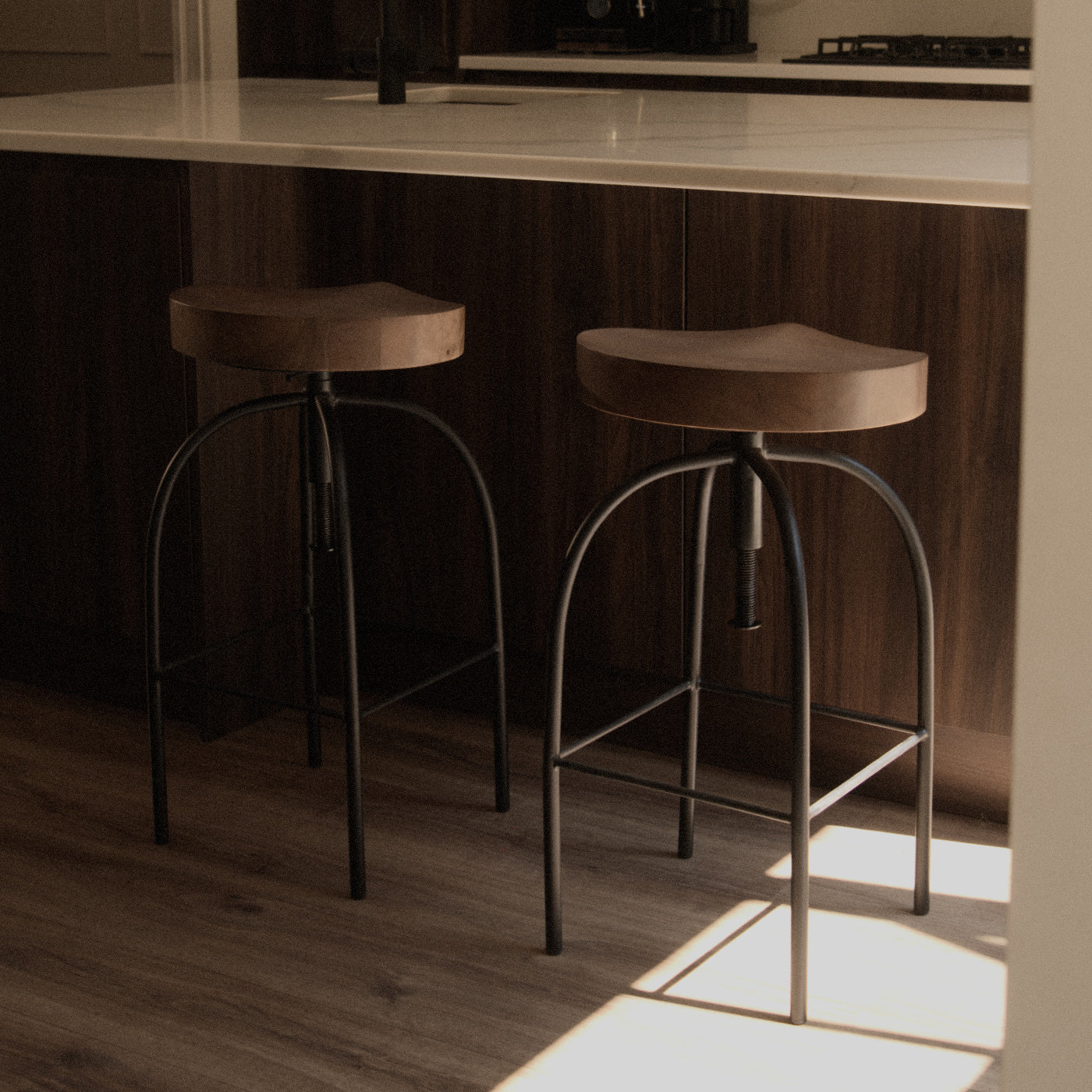
Most standard kitchen counters sit at around 90cm, which means counter stools generally fall between 65cm and 75cm in height.

As a rule, you’ll want around 15cm to 25cm of space between the top of the stool seat and the underside of the countertop. Any tighter and the seating starts to feel cramped. Any larger and the stools can begin to feel disconnected from the surface itself.
For a standard 90cm kitchen counter, a 65cm to 75cm stool is usually the sweet spot.
Bar Height Stools
Taller breakfast bars and commercial-style counters require a slightly higher stool, typically between 75cm and 85cm.

Again, spacing matters. Aim to leave around 20cm to 30cm between the seat height and the underside of the bar for comfortable seating and enough legroom.
If your bar measures roughly 105cm high underneath, stools within the 75cm to 85cm range will usually work best.

The standard height countertop for most domestic kitchens is 90cm. Look to pair with stools that are no less than 15cm and no more than 25cm from the top of the stool to the underside of the counter.
For instance, the correct bar stool height for a 90cm counter would measure between 65cm and 75cm in height.
Stool Spacing
Spacing is often overlooked, but it has a huge impact on both comfort and appearance.
Bar stools pushed too closely together can make a kitchen feel cluttered and awkward, particularly during longer meals or when entertaining guests. Too far apart, and the arrangement can feel disjointed.
As a general guide, leave at least 15cm between stools, with around 25cm to 35cm often feeling the most balanced visually.
Backless or Backrest?
The right choice depends entirely on how you actually use the space.
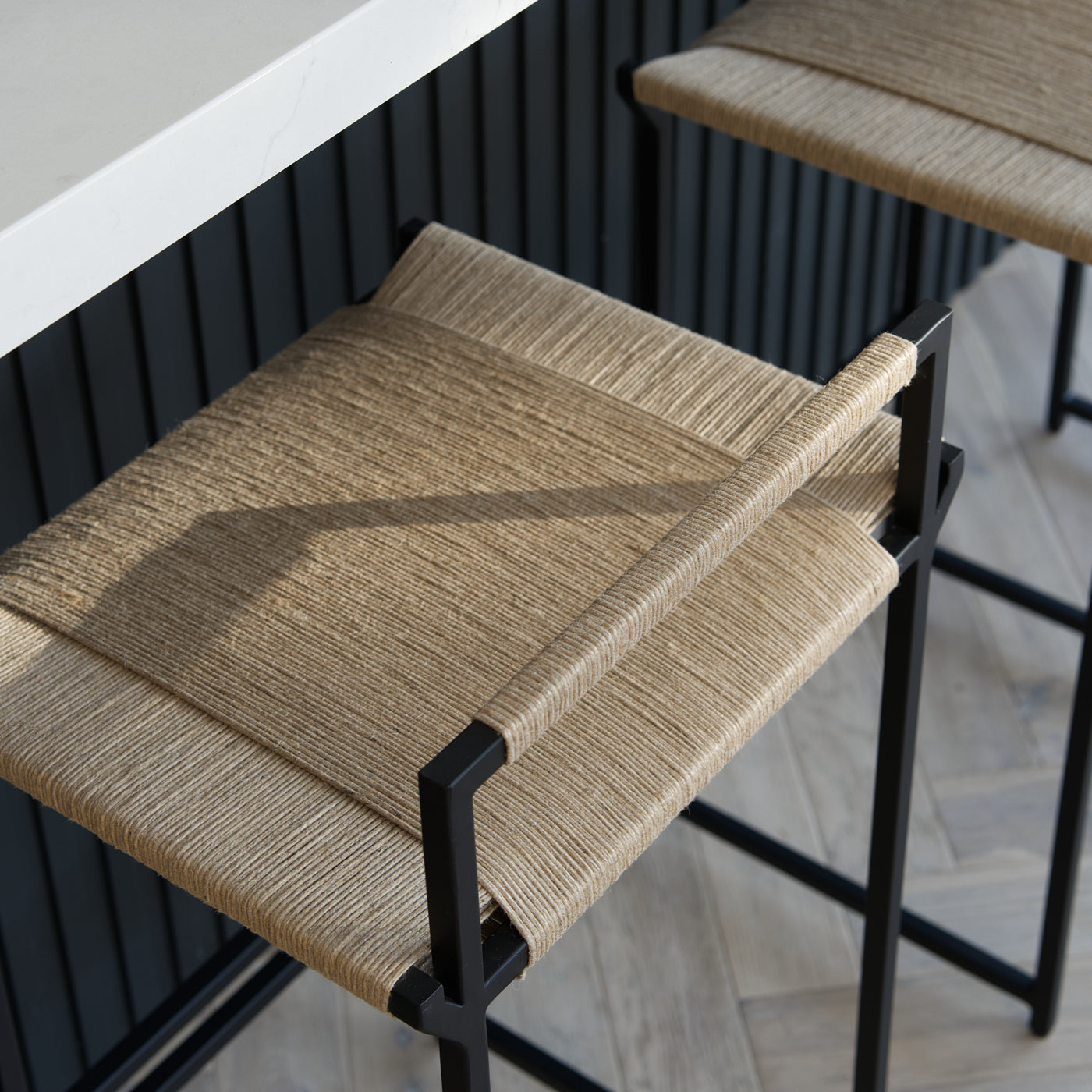
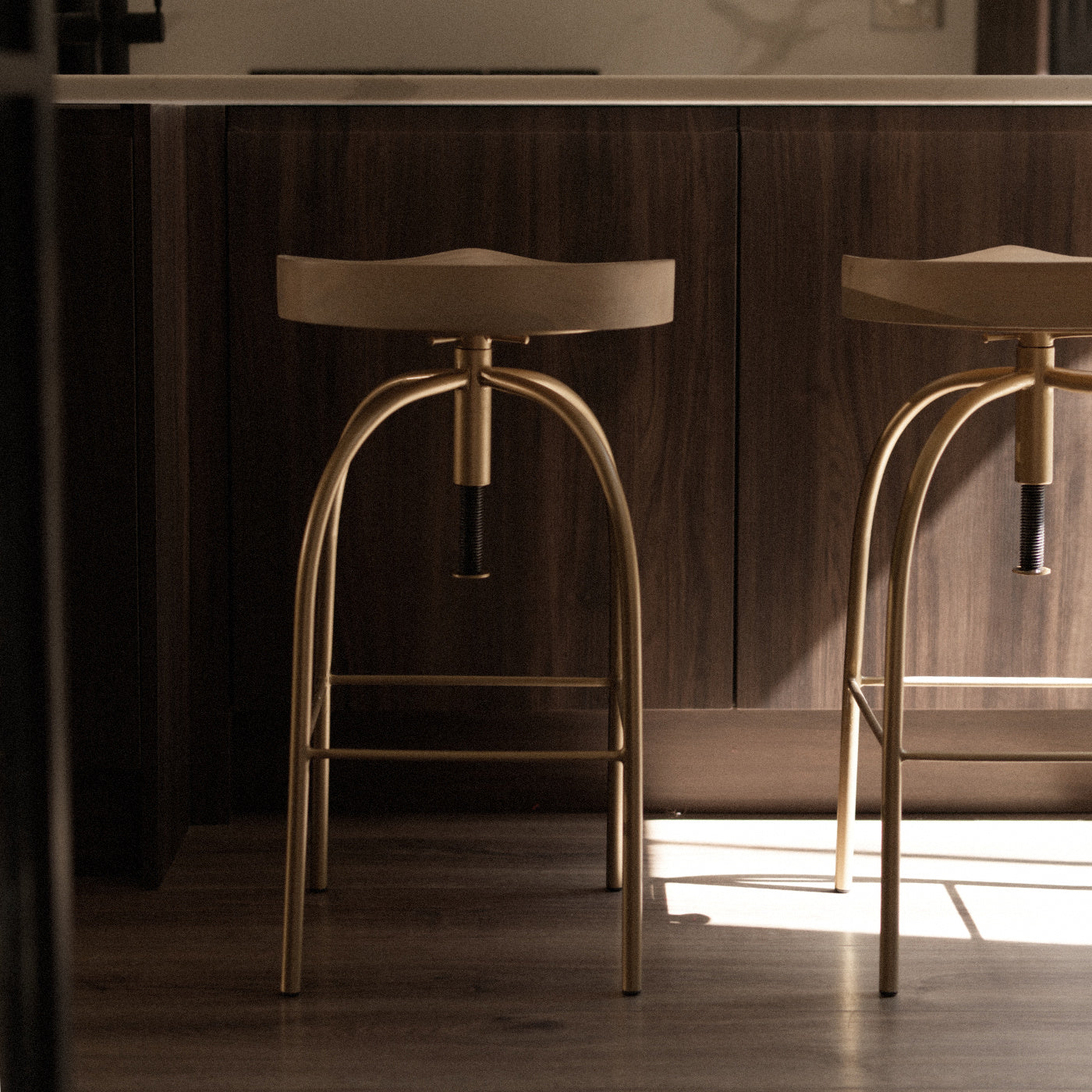
Backless stools tend to feel lighter visually and tuck neatly beneath a countertop, making them ideal for smaller kitchens or more minimal interiors. They work perfectly well for quick breakfasts, evening meals or occasional use.

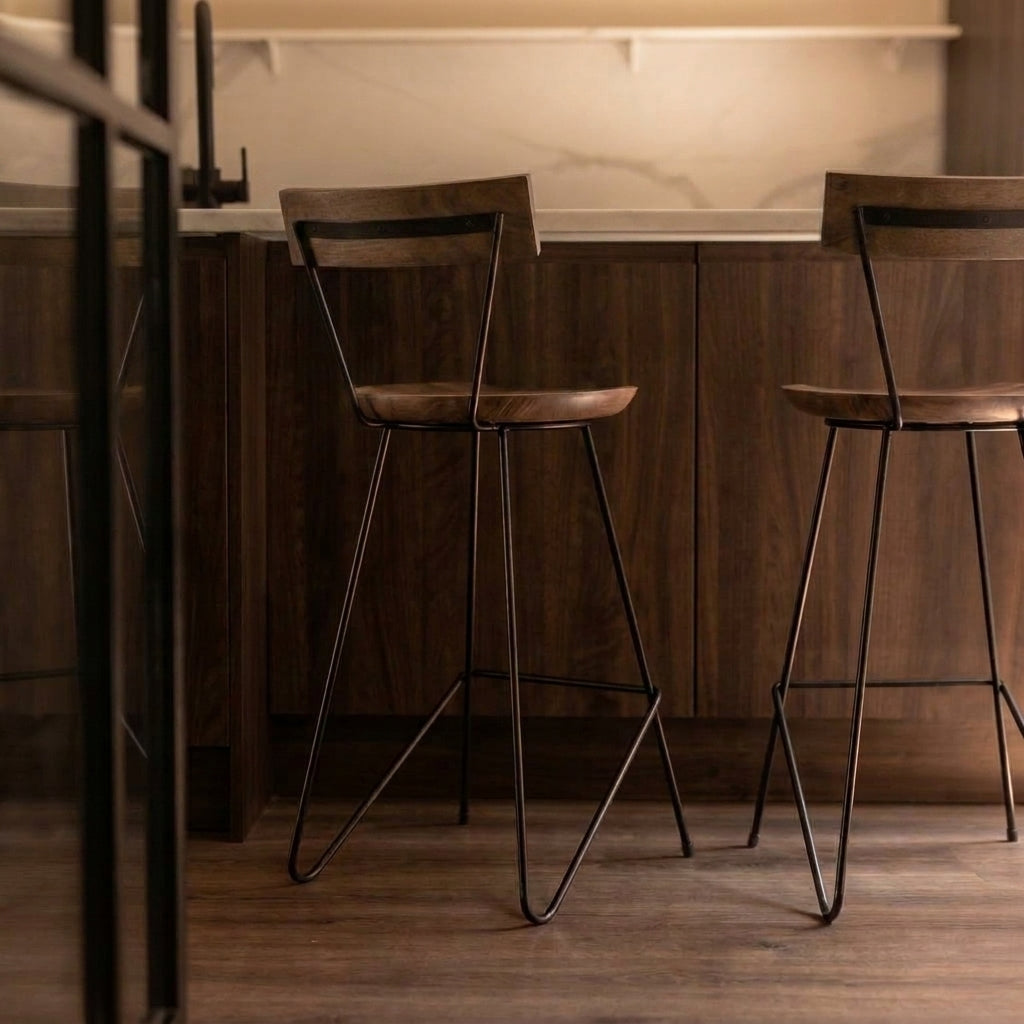
If you work from your kitchen counter, spend evenings entertaining or simply prefer more support, a stool with a backrest is usually the better option.
Wooden or Upholstered?
There’s a balance between comfort and appearance. Wooden and metal stools often feel cleaner, slimmer and more architectural within a kitchen space. Upholstered designs naturally offer more comfort during longer periods of sitting, but can look bulkier depending on the style.

If the stools are mainly used for shorter periods, a solid wood or woven design generally suits. For daily working, dining or lingering over coffee, padded seating tends to make more sense.
Consider Legroom
If your kitchen island or breakfast bar has a solid base underneath, legroom becomes especially important.
Ideally, you’ll want around 30cm to 35cm of overhang beneath the countertop so knees and legs can sit comfortably underneath without forcing you too far back from the surface.
The best bar stools balance practicality with proportion. Get the height right, leave enough spacing and choose a style that suits how you genuinely use the space day to day. Once those fundamentals are sorted, the aesthetic decisions become a lot easier.
And most importantly, you can finally stop measuring the kitchen every five minutes.